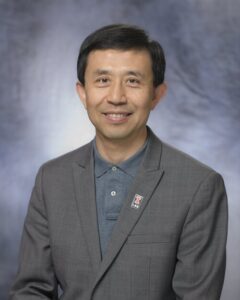
Spatial Analytics: From the Margins to the Mainstream
Luc Anselin, University of Chicago
This talk is a personal reflection on the evolution of spatial analysis I experienced over the past 40+ years. Many consequential changes have taken place in terms of the mechanics of analysis, moving from a small data to a big data world, from mainframe and desktop computing to cloud environments, and from analytical proofs to AI agents. In reviewing this evolution, I will focus on the role of some fundamental spatial concepts, such as spatial interaction, Tobler’s law, scale and MAUP, and spatial heterogeneity. I will relate this to my own experience in software development, moving from SpaceStat, to desktop GeoDa and geoda.ai. I will close by offering some speculations about the future.
Bio: Luc Anselin is Stein-Freiler Distinguished Service Professor of Spatial Data Science in the Social Science Division of the University of Chicago, where he founded and directs the Center for Spatial Data Science. His research deals with the development of methods and software for the analysis of spatial data, including spatial econometrics, local indicators of spatial association and exploratory spatial data analysis. He is an elected member of the US National Academy of Sciences and American Academy of Arts and Sciences.
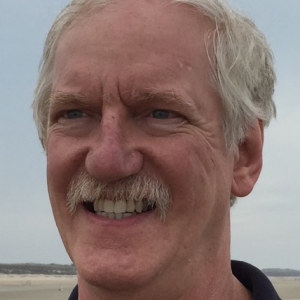
Data Challenges and Impact
Chaitan Baru, the National Science Foundation
This talk will begin with an overview of programs in the Emerging Technologies section of the NSF Directorate for Technology, Innovation, and Partnerships (TIP), focusing especially on the underlying data science and AI challenges. We will then discuss the notion of prize challenges, and how progress could be made via such challenge programs. How does the challenge model fit the current model for research? TIP is also interested in measuring the “impact” of use-inspired and translational research. What should be the metrics for such “impact”, how should they be reported, and how do they compare with typical current measures of impact in research?
Bio: Chaitan Baru is Section Head for Emerging Technologies in the Technology, Innovation, and Partnerships (TIP) Directorate at the National Science Foundation (NSF). The TIP Directorate focuses on translating and accelerating critical technologies into practice to drive economic growth, workforce development, and the creation of high-quality, high-wage jobs. The TIP Emerging Technologies portfolio includes programs in artificial intelligence, quantum information science and applications, biotechnology, semiconductors, advanced communications, data security, advanced materials, and disaster response and management. Some of TIP's most recent program announcements include Programmable Cloud Laboratories, TechAccess: AI-Ready America, and Tech Labs. Prior to beginning his assignments at NSF in 2014, Dr. Baru spent 20 years at the San Diego Supercomputer Center, University of California, San Diego.
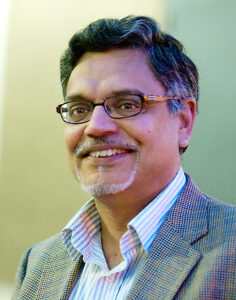
The State of I-GUIDE
Shaowen Wang, University of Illinois Urbana-Champaign
This keynote will provide an overview of the current state of the NSF Institute for Geospatial Understanding through an Integrative Discovery Environment (I-GUIDE), highlighting major accomplishments, emerging opportunities, and strategic directions for the future. As artificial intelligence (AI), data science, and geospatial technologies continue to reshape scientific discovery and real-world decision-making, I-GUIDE is advancing a convergence research and education ecosystem that integrates cyberinfrastructure, data, models, and various communities of practice. The talk will showcase recent progress in responsible spatial AI, workforce development, and collaborative research addressing complex geospatial challenges in various domains. It will also reflect on lessons learned from building a national institute and outline future priorities for expanding innovation, partnerships, and impact across science and society.
Bio: Shaowen Wang is a Professor of Geography and Geographic Information Science and of Computing and Data Science at the University of Illinois Urbana‑Champaign (UIUC). He serves as Associate Dean for Natural and Mathematical Sciences in the College of Liberal Arts and Sciences and as a Senior Faculty Fellow in the Office of the Vice Chancellor for Research and Innovation at UIUC. He is the founding director of UIUC’s CyberGIS Center for Advanced Digital and Spatial Studies and leads the National Science Foundation‑funded Institute for Geospatial Understanding through an Integrative Discovery Environment (I‑GUIDE). His research focuses on advancing cyberGIS, geospatial data science, and spatial artificial intelligence (AI) to develop scalable solutions for complex geospatial problems and sustainability challenges. He is a Fellow of the American Association for the Advancement of Science, the American Association of Geographers, and the University Consortium for Geographic Information Science.