Open Science and Reproducible Workflows with Urban Taxonomy and OSPD
May 20, 2026 11:00 am (Central Time)
Recorded VCO
Abstract
Despite significant advancements in FAIR and Open Science via new platforms (EarthCODE), tools (Jupyter, Quarto), and even journals (Urban Planning B: Data and Code), there are still challenges to accessing, visualizing and using scientific data, as well as running scientific code/experiments. Currently, data initiatives prioritize cloud-native formats and metadata, whereas code initiatives focus on verifying, reproducing, and describing workflow components.
In this talk we use the Urban Taxonomy project (urbantaxonomy.org) and the results from the Open Science Persistent Demonstrator (OSPD) of the Open Geospatial Consortium (OGC) to highlight challenges, opportunities and tools for FAIR and Open Science. Urban Taxonomy classifies Europe's built-up fabric, categorizing cities into regions of consistent urban form (building and street layouts, compositions, and configurations) connected via a taxonomic tree that encodes regional similarity. Complementing this, OGC OPSD focuses on making such scientific code reproducible and FAIR. We will focus on the challenges that we came across related to accessing, interpreting, and visualizing data, alongside running, editing, and modifying code. We will also outline the project’s approach to contributing to the broader Open Source Software (OSS) community and show how OGC OPSD tools can assist in streamlining this open science process.
Speakers
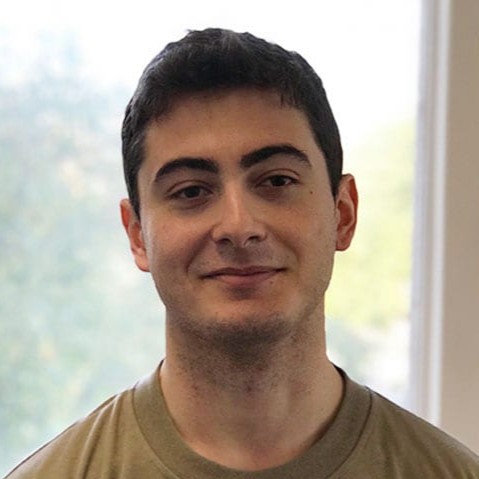
Krasen Samardzhiev
Lampata Ltd, England
Krasen Samardzhiev is a co-founder of Lampata Ltd., a research and engineering team focused on geo-spatial AI/ML. With experience in open-science & open-source and expertise in remote sensing & earth observation, Lampata helps people derive and use intelligence from geo-spatial data sources, such as aerial footage, mobility data, building footprints, and satellite images, and has been contributing to the OGC for the development of standards for geospatial data, sensor webs, and AI-powered Earth observation. Krasen holds a doctorate in Geospatial Data Science from the University of Liverpool.