GeoLocate: Spatial Modeling of Market Entry Viability
July 22, 2026 11:00 am (Central Time)
Recorded VCO
Abstract
2nd Place Winner in I-GUIDE's 2025-26 Spatial AI Challenge!
Market entry is highly uncertain, with non-spatial methods often ignoring spatial dependence and providing limited support for geographic decision-making. This study develops a Bayesian Spatial AI model using a Besag-York-Mollié 2 (BYM2) framework and Bayesian Lasso regularization to predict business survival probabilities. The model integrates data from OpenStreetMap, Sentinel-2 imagery, IBGE census data, and the Brazilian Federal Revenue and is validated across the Retail and Food & Beverage sectors in São Paulo and Rio Grande do Sul. The results show that spatial dependence accounts for 85% of the residual variation. Bayesian Lasso identified income, accessibility, and urbanization as key predictors. Compared to non-spatial models, this approach significantly improves predictive performance (elpd_diff = 28.48), eliminates residual autocorrelation, and provides geographically explicit uncertainty quantification, enabling risk-aware spatial decision-making for entrepreneurs and policymakers.
Speakers

Jaiany Rocha Trindade
School of Management, Federal University of Rio Grande do Sul (UFRGS, Brazil)
Jaiany is a Ph.D. Candidate in Marketing at PPGA/UFRGS (Brazil) and a Visiting Fellow at Harvard University. She holds a B.A. from UFCG. Her research interests center on market entry, market potential, demand estimation, and advanced statistical modeling, including machine learning and Bayesian spatial analysis. In 2025, she became the first Brazilian scholar to win the AMS Review-Sheth Foundation Doctoral Competition for Conceptual Articles (DoCCA). Jaiany is a member of GPMC/UFRGS and L@EC/UFCG and has professional experience in marketing analytics.

Vinicius Andrade Brei
School of Management, Federal University of Rio Grande do Sul (Brazil)
Vinicius Brei is a Research Affiliate and Connection Science Fellow at the MIT Media Lab, as well as an Associate Professor of Marketing at the Federal University of Rio Grande do Sul. His research focuses on the intersection of consumer analytics, judgment and decision-making, and market dynamics, with a specific focus on predicting individual and organizational behavior, estimating market potential, and forecasting demand for new business development. He employs a variety of methods, including behavioral experiments, GeoAI, Bayesian inference, and causal analysis. Brei is a former Visiting Scholar at Harvard University and holds dual Ph.D. degrees in Sciences de Gestion from HEC Paris and Marketing from UFRGS, Brazil.
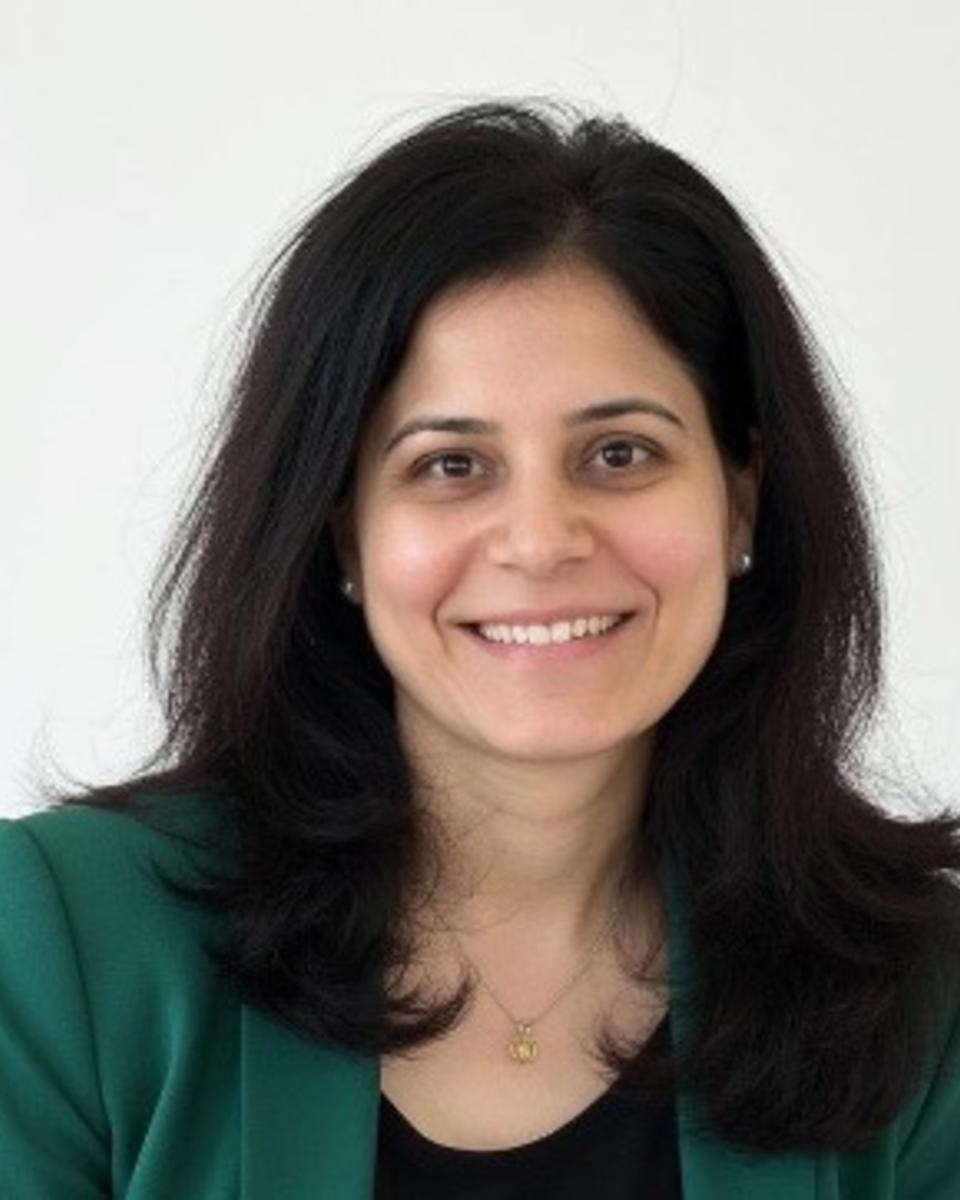
Devika Jain
Center for Geographic Analysis, Harvard University
At CGA, Devika Jain leads the area of GeoAI, Spatial Data Science and Big Data using High-Performance Computing (HPC) and Cloud Computing. She has led the development of impactful solutions, including TSGI (a UN-recognized spatial well-being metric), RINX- a transformative tool for the handling of raster big data , and a novel K-NN method enabling the first individual-level analysis of partisan segregation in USA. She has also led the development of university-wide Spatial Data Infrastructure (SDI) at Harvard which is part of Open Geospatial Consortium (OCG's) National Spatial Data Modernization Hub. Jain has managed key projects funded by Harvard’s Office of the Vice Provost for Research (OVPR), the National Science Foundation’s Industry–University Cooperative Research Centers (NSF/IUCRC), and the Gates Foundation.